
Retail Radicals: Prescriptions from the Trenches for Revitalizing Physical and Online Selling (and Renting!)
NEW YORK, NY; August 8, 2019—The themes articulated through nine very different presentations at The Robin [Lewis] Report’s 10th annual Retail Radicals forum at Columbia University were consistent to a fault, with overlapping examples (often humorously so), and a common outlook despite the presenters coming from divergent sectors of the retail industry.
The themes:
- Detrimental impact of reporting comp sales figures;
- Pressure for unrealistic quarterly growth to satisfy The Street;
- Reliance on spreadsheets rather than shopper realities;
- Delivering “local wonder;”
- Growing value of peronalization/customization;
- Decline of the most basic customer service;
- Integration of online-offline shopping;
- “Experiential” shopping.
None of these are new, but in an environment (which no one needed to emphasize to this audience, and no one did!) where store closings compound hourly, the need for more-than-cosmetic change is accelerated, and the perspectives of the speakers, and how they supported their points of view, provided multiple lenses through which to build toward the future. And while The Robin Report, and this event, are focused primarily on apparel and accessories retailing, the insights of the day apply across all sectors.
A Dose of Desperation
Witness the success of online apparel rental companies, represented at the conference, in separate presentations, by CaaStle’s Christine Hunsicker and Rent the Runway’s Gabby Cohen. CaaStle provides subscription model apparel rental infrastructure for retailers including Ann Taylor, NY&Co, Vince, and others. Rent the Runway aggregates apparel and accessories through purchase or consignment from multiple sources and rents items on an occasion or subscription basis.
“With new business models you need a little desperation,” says CaaStle’s Hunsicker, in order to prod senior management at traditional retailers (or anywhere else) to take chances. Similarly, Paul Charron, former CEO of Liz Claiborne, speaks of the “challenge of disrupting without usurping the prerogative of the CEO.”
On the difference between bricks and mortar selling and online rental: “Everything rents; 6%-7% of your [rental] customer base will have your worst-selling garments in their closet,” says Hunsicker. “The most important consideration for the renter: ‘Do I like the photo enough to have it?’”
By Hunsicker’s count, CaaStle’s retailers will sell 2.4 items to the average customer a month — but the rental customer will go through 108 garments over 12 months.
“Customers are our mini-warehouses,” she adds. “If we’re doing our job right, only about 15% of our inventory is in our warehouse at any one time.”
To retain customers, a retailer’s online rental operation needs to add “at least 50 new SKUs a month.” Ann Taylor, she says, introduces 150 new SKUs to its stores and rental system a month. But she also distinguishes between an Ann Taylor, which uses rental to add new, younger customers to its client base, while a retailer such as NY&Co, at least initially, sought only to monetize existing inventory that hadn’t sold through in its physical stores.
The ultimate business question: How long it takes to earn back the cost of acquiring customers. The goal, for Hunsicker, was 12 months. Netflix, she says, takes 20 months. “For traditional transaction brands [going to rental] it’s been two months” for CaaStle clients (CaaStle is only about a year old).
Rent-to-Buy
What of rent-to-buy? “It’s price dependent; 25%-30% of revenue from consumers is buy. At Ann Taylor, where the base monthly rental fee is $95, buy is a 30% kicker.”
With CaaStle, the retailer retains ownership of the inventory while CaaStle warehouses and services (processes orders, dry cleans, etc.). This differs from Rent the Runway, which usually owns its inventory, but, as mentioned, sometimes works on a consignment basis.
CaaStle is adding its first men’s brand this month with Scotch & Soda. “Men are more open to new business models,” Hunsicker says, “but it’s one chance [the clothes need to fit/look good] or they’re out.” Two more men’s brands are in the offing.
At Rent the Runway, Cohen says the company is building a drop box network for returning items, which would speed turns. So far Rent has installed about 25 at WeWork locations and at seven Nordstrom stores. Earlier in the afternoon, Columbia University professor and past C-level retailing executive (Sears, Lord & Taylor, Gap, others) Mark Cohen derided the announcement that Kohl’s is installing Amazon returns centers in hopes of building foot traffic.
Rent is also adding offerings that people “don’t need to keep or store,” such as kids’ apparel (they outgrow quickly) and skis.
Integrating Retail Into Lifestyle
Successful physical fashion retailing is “not about racks and racks and racks of apparel,” says Kevin Roche, of retail design firm Woods Bagot and a nine-year veteran of design for LVMH.
Roche sees continued “integration of office, living, retail, entertainment, sports” in uniquely designed spaces, and a need to incorporate “tons of technology and touch screens” in bricks and mortar stores.
Luxury retailers, in particular, he says, should trim the number of their physical outlets. “There should be 5-8 Nieman-Marcuses,” he says, while large-scale redesigns should be more judicious. “You can spend $300 million to redesign a flagship like Macy’s, but that won’t impact your other 584 stores.” It’s different, he notes, if you’re Harrod’s and you have only one store.
Is Smaller Better?
What of smaller-footprint outlets ala Target and Nordstrom’s efforts? “Walmart closed 114 Express stores in 2018,” notes Columbia’s Cohen. “The customer may live in the neighborhood [and see it as a neighborhood store] but they still expect 200,000 square feet of merchandise,” says Columbia’s Cohen. Also from Cohen:
- “The off-price growth streak is over.”
- “Walmart has foolishly entered a race [with Amazon] that it cannot win. Amazon is a market place, not a store. Like it or not, Walmart is a store.”
- “Acquisitions add to a company’s efforts [to grow] as ceramic tiles do to a mosaic.”
If you have the opportunity to hear Mark Cohen in person, do so. While he is very entertaining, his store-by-store critiques are uncompromising, and I can barely touch on his prepared remarks let alone the adlibbed asides. Ultimately asked by an audience member who does retail well, he didn’t miss a beat responding “Costco,” then adding, as he thought, Amazon, Zara, and “Feldman Housewares on the Upper East Side, near where I live. You go in and ask for what you need and the woman at the register tells you what aisle it’s in or that they don’t have it and you’re better off ordering online. Mom and pop hardware stores have an incredible array of merchandise and offer the best customer service anywhere.” To which everyone nodded in agreement.
Slides below are courtesy of Mark Cohen:

Source: Mark Cohen, Columbia University

Alibaba’s Genie
The eye-opener for many, judging by the gasps as her slides went up, was Alibaba’s Candice Huang. Consider:
- Alibaba’s Singles Day sales event on 11-11 (all “1’s” for a shopping day designed for singles) generated $30.8 billion in sales in one day compared to total U.S. online sales of $24.2 billion over the five-day Thanksgiving holiday (Thursday through Monday).
- The platform boasts 700 million active monthly users who, if they stay with Alibaba for five years, place an average 23 orders across 132 categories and spend $1800 annually through the platform.
- With all the focus on China’s growing middle class, Huang says Alibaba has 100,000 users spending $159,000 each annually, though no one asked if that includes small businesses that might be making bulk purchases (think of the dollies of food items purchased at Costco by small restaurants and food carts and trucks).
- 59% of users are under 29. (Rent the Runway’s Cohen says median age for its customers is also 29.CaaStle’s Hunsicker says its sites’ core customers are 28-45.)
- Among Alibaba’s sites, Huang describes Taobao as a “superapp” from which customers can do general retail shopping as well as book travel, live entertainment, and other services — analogous to the shift at malls to offering more entertainment options in addition to traditional shopping.
Quote of the day:
- “’Focus group’ is a dirty word.” — Alexander Genov, head of consumer research for Zappos.
Note: Slide up top courtesy Christopher Timmins, Intel, which presented the The Robin Report conference along with sponsor SAP.

Is Cauliflower the New Kale? And Other Trends from the Fancy Food Show
NEW YORK; JULY 12, 2019—It’s been a few years since I attended the Specialty Food Association’s Fancy Food Show. I’d forgotten how you have to pace yourself on sampling, and that this show is overwhelming in the best sense. Here’s the skinny…
Is cauliflower the new kale? Peekaboo has cauliflower “hidden” (their word) in its organic chocolate ice cream (other flavor combos: mint chocolate chunk-spinach, vanilla-zucchini, strawberry-carrot, cotton candy-beets); Nolita has tater-tot-y Cauli-Bites; and From the Ground Up offers cauliflower chips, pretzels, crackers and stalks. Caulipower has been making cauliflower-crust pizzas for more than two years. How long ’til the kids catch on? And we are not alone on this: Fullgreen in the UK makes shelf stable Cauli Rice.


Coconut is still ascending. While many of these products have been available for a few years, there seemed to be a critical mass now: Cheeseland’s Kokos Coconut Cheese; Anita’s Coconut Yogurt; Coconut Collaborative yogurts and dessert pots (chocolate and salted caramel chocolate); W&M’s coconut chips in original, caramelized, and unsweetened, added to other varieties in its line; and more variations on coconut water than I could keep track of.


Is plant-based cheese cheese? Good Planet says its coconut oil-based food is dairy-free cheese. Tofu-based “cheese” products have also been around for a while. Yet because Velveeta is made of both whey and milk protein, Kraft has to label it “Pasteurized Prepared Cheese Product.” The USDA website says that cheese is a dairy product. And Wikipedia declares, “Cheese is a dairy product derived from milk that is produced in a wide range of flavors, textures, and forms by coagulation of the milk protein casein. It comprises proteins and fat from milk, usually the milk of cows, buffalo, goats, or sheep.” So why are these other options called “cheese”? Plant-based, generally, is on the upswing, at least in the number of offerings.
Sous vide, which seems played out in the consumer kitchen, is making a play for refrigerated and frozen food cases. Butcher’s has sous vide chicken vacuum packed for refrigeration; this was so new it’s not on the website yet, which is devoted to parent company Roli Roti’s Bay Area food truck business.


Long-time confectioner Maud Borup has added “drink bombs” — they work like colored, flavored Alka Seltzer — to its lineup. Given the popularity of bath bombs, can a version with a toy embedded be far behind?
Personal favorite licensed line: Flavors of Ernest Hemingway BBQ sauces, cocktail mixes, marinades, spices. Wife and husband team (many exhibitors are family and often multi-generation operations) that’s been a condiments licensee of the estate for about two years, with a major growth spurt over the last two months.


Coming on strong, so to speak: Coffees infused with alcohol, but with no alcohol content. Typically, as I understand it, the alcohol burns off in the roasting process, or the beans are finished in bourbon (or burgundy or other) barrels. World of Coffee has Jack Daniel’s Old No. 7 Brand licensed from Brown-Forman as well as Maison Camus (licensed French cognac brand). Burke Brands licenses Don Pablo. Other licensed brands include Kahlua, Oak & Bond, and Jim Beam. (At Licensing Expo a few weeks prior to the Fancy Food show, a Brazilian company was demonstrating a process for making alcohol-infused coffee pods.)


If you really want to talk “infusion,” though, think about the burgeoning CBD and hemp markets, not to mention cannabis. Sure, there were CBD- and hemp-infused products at the Fancy Food Show. But when CBD hits its stride — and there are many reasons that could be a while — the Javits Center won’t be anywhere near large enough to host the SFA’s Fancy Food Show any more. (For more on CBD- and beer-infused products at the Fancy Food Show, see Licensing International’s Inside Licensing.)
Quote of the show: “Put a unicorn on anything and it will sell,” says Maud Borup’s Vanna Olson. Indeed, Peekaboo is promising a unicorn flavor ice cream, though the “infused” veggie hasn’t been announced yet.

Tailor-Made for Licensing: Ira Mayer’s Three Must-See Products at NY Toy Fair
NEW YORK, NY; FEBRUARY 18, 2019—If it’s all about the elevator pitch, these three new products from three first-time exhibitors explain themselves instantly. As do licensed applications. All exemplify classic play value, each with a neat twist. Check them out in person before you leave Toy Fair, or online.
#1. The Door Fort, from Cortex Toys (booth #4245). Inventor Jesse Darr loved building forts as a kid — and now that he has his own child, remembers how his parents would be left with putting everything away once he went to bed. The Door Fort is his answer. Hangs on the door. Open the door, fold it out to three dimensions, Velcro to the door post. Voila!
One major license is already in the works. Easy to picture Darr’s generic Princess Castle as, say a Disney Princess castle, no? How about Thomas? Pretty much name your property. Contact: John Cowan, MD, CEO/Founder, Cortex.


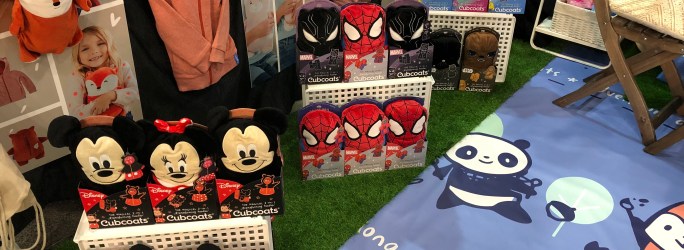
#2. Cubcoats (booth #5974). It takes 13 seconds to demonstrate how a plush character pillow transforms into a machine-washable fleece hoodie — and back again (OK, back takes 16 seconds).
In addition to original designs, they have Mickey, Minnie, Minion, Marvel, and Troll versions, and they’ve just signed Nickelodeon. The product was exclusive to Nordstrom for fourth-quarter last year, but is now available for wider retail. This is beautifully executed. Contact: Brydie O’Neill, VP Product Development; Angela Michael, Business Development/Sales.


#3. VertiPlay Marble Run by Oribel (booth #4135). Yes, it’s another marble run, but with a literal twist: Base boards are wall-mounted and tracks posted on the base pieces.  It’s even decorative, and the tracks can be moved into different designs. This is so new it’s not on the website yet, but Singapore-based Oribel has offered other vertically-mounted toys for toddlers for several years. This is clearly for older kids in a bedroom or playroom. Contact: Smriti Modi, Growth Hacker (great title!).


Amazon’s Big and Others’ Little Boxes: An Idiosyncratic Take on Licensing Expo
NEW YORK, NY; May 26, 2018—In the end, it’s all about boxes, isn’t it?
Amazon was, is, and will remain The Topic for licensors, manufacturers, retailers, consultants, agents, and anyone else involved in the business of licensing. And what is Amazon about if not boxes?
The headline out of Licensing Expo in Las Vegas this month had to do with Merch Collab, the online retail behemoth’s new program offering design and manufacturing/sourcing expertise for fast-to-market licensed merchandise to be sold on its eponymous website.
But as much as has been written about Amazon’s impact on retailing, that impact can’t be overestimated. Whether Epic Rights’s Dell Furano holding forth on the shift of music and celebrity t-shirt and jersey sales from venues to physical retail to online or Cartoon Network’s Pete Yoder enthusing about the technology behind Amazon Go, the company’s prototype supermarket (and likely all-merchandise) store of the future, to cite but two conversations during Expo, any conversation about retail inevitably turned to Amazon.
A part of that discussion that tends to be underrepresented, however, concerns Amazon’s various experiments with physical retail. Just as many “digital-only” magazines discovered the need to develop physical magazines because that’s what advertisers demanded, so, too, Amazon clearly recognizes that physical retail isn’t going to disappear.
My friend Marty Porter, executive director of the Media & Entertainment Services Alliance (MESA), and author of the Record Plant Diaries, calls this phenomenon “physigital,” and predicts that physical media will cater to the luxury segment of the market while digital will be for the masses. Amazon understands and lives that concept instinctively.
That’s one type of box. In my idiosyncratic take on what was fun and interesting at Licensing Expo, though, there’s another:
Cross Bratz with Shopkins, mix in the unboxing craze, add steroids, and you have Boxy Girls, which debuted exclusively at Walmart via Jay@Play the week of this year’s Licensing Expo. The child gets the doll in a box that has additional little boxes with clothes, accessories, makeup and other items. There are add-on boxes with multiple surprise boxes, boxes with two limited edition dolls plus little boxes, and so on. This is completely of-the-moment. Jay@Play is represented by Cynthia Hall Domine’s licensing agency, Synchronicity.


Cartoon Network (CN) has worked with subscription box licensees Loot Crate and Box Blvd., notes CN’s Pete Yoder, who sees boxes as viable long term rather than a fad, particularly as the ratio of consumables is increased in the mix.
In a larger context, boxes (and unboxing) are part of the trend toward licensing experiences rather than products. CN has been upping the number of live and touring shows it does, says Yoder, especially in Latin America and EMEA. CN launches its first cruise ship in 2019 — cruises have become a staple for Disney — and the network has its CN-themed Six Flags amusement park in China. In the U.S., Adult Swim’s Rickmobile started touring the country last summer; now there’s an Adult Swim music and comedy festival scheduled for Los Angeles this October and featuring Run the Jewels, among other acts.
BuzzFeed had one of the more curious booths — certainly for those of us who aren’t regular BuzzFeed addicts (that includes me). Visitors toured its big red box of a booth, with only the name out front by entering a series of doors that led to rooms that had displays and might also be housing BuzzFeed execs for meetings in action.


There wasn’t much to fill you in on exactly what the rooms represented (I went through three times at different points in the show, uniformly hearing people mystified and curious) until you read the thick newspaper-like handout that explained the rooms were themed to popular BuzzFeed channels — in particular the foodie Tasty brand room, which had a display of kitchen utensils and a chef preparing pancakes and other goodies. Turns out the line of Tasty-branded utensils are also a Walmart exclusive.
Shout out to BuzzFeed for the best swag of the show: When you got to the end of your self-guided tour there were bags on pegs and shelves from which to select whatever items you wanted — multi-colored measuring cups and whisks, cosmetics cases (or maybe they were pencil cases?), glass water bottles, miniature yo-yos…Eric Karp is heading up the licensing effort.
And moving beyond boxes. Way beyond boxes:
The dinosaur roaming the show entrance near the Universal booth and scaring the bejesus out of unsuspecting passersby was presumably promoting the upcoming Jurassic World: Fallen Kingdom movie opening June 22. I say presumably because no one was indicating what he was about, despite a handler upfront in dinosaur-wrastling get-up and a handler in the back keeping people away from the giant tail. The guy inside this costume wielded it phenomenally well.
Lenovo’s Jedi Challenges, available since late last year but offering demos at the show to attract other properties is the first augmented reality game I’ve seen that defined the genre for me:  Put on the goggles, extend your lightsaber and you’re jousting lightsaber to lightsaber with a Jedi. Or in local mode, with another player. Asked whether the Star Wars relationship with Disney bodes well for Marvel and other Disney franchises down the road, a spokesperson suggested that “it’s easy to imagine” such a scenario but for now they are “concentrating on Star Wars.” That said, more software is needed to justify the expense of the $199 headset, but the play value is pretty incredible.
Walking malls in recent months conducting licensing tours,  I’ve been struck by the variations on the classic photo booth — booths that upload to Instagram, selfie booths (contradiction in terms, no?), booths that feature licensed properties. At the show, Sony Pictures had an interesting iteration with a screen featuring characters from its upcoming Hotel Transylvania 3, opening July 18. Facing it, when you moved, the character mirrored your moves. Your image appeared in the corner near the movie character. More traditional: When Grumpy Cat wasn’t available in person for a photo, you could step in an old-fashioned photo booth and pose next to a preprogrammed Grumpy Cat.
On the promotional side — and what is Licensing Expo if not a promotional event? — kudos to WWE and, especially Sesame Street (see photo up top for your humbled blogger and friends), for the photo ops in the show’s registration area. Great way to talk into a show.
The booth garnering the most speculation was perhaps that of Jonathan and Drew Scott, known for their HGTV Property Brothers home-fixer-upper TV show. The booth referenced Property Brothers but the license being offered was Scott Brothers.

I assume Property Brothers is owned by the network and that the Scotts want to control their own licensing. (That’s akin, so to speak, to the situation many chefs featured on, say, Food Network, find themselves in: Network owns the show and controls licensing rights, but savvy chefs have retained the rights to their individual names.) The Scotts’ booth — a large, multi-tiered, beautifully outfitted affair — was packed when the brothers were on hand, and not very populated the rest of the time, save for a few staffers.
Licensing Expo is not just about entertainment, though it can feel that way. There are heritage brands, literary properties and artists along with fashion labels, sports properties, and others. 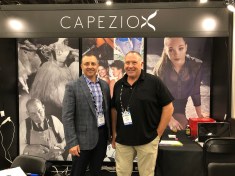 Among the heritage brands new to the show this year were two fourth generation members of the family that founded Capezio, the classic dance apparel and footwear brand. While the brand was once licensed to a wider audience, it has in recent years been more limited to the dance community. Reimagining the brand through licensing is the plan.
The Licensing University program sponsored by LIMA orients hundreds of newcomers to understanding the benefits of licensing, the structure of the business, the trendlines and more.

Gary Caplan, Ira Mayer, Katy Briggs
I had the honor once again of leading the opening “Basics of Licensing” panel with “godfather of licensing” Gary Caplan, of Gary Caplan Inc., and Hallmark’s Katy Briggs. Thanks to you both, and to LIMA’s Marty Brochstein for inviting all three of us to participate.
 Finally, at the airport leaving Las Vegas, there was a great pop-up booth dedicated to local hockey team the Vegas Golden Knights, who made it to the Stanley Cup finals. Sporting goods stores in Fashion Show mall were also festooned with Knights merch, but the pop-up was a great unintentional last impression of the show!
Looking for a licensing assessment to assist with strategy and new business development? I’ll help you identify the white space for your licensing program through competitive analysis. Visit www.iramayer.com for details.
Walking The Aisles: NY Toy Fair 2018
BROOKLYN, NY: February 23, 2018—An idiosyncratic distillation of New York Toy Fair this week.
Is Rubik’s the Toy World’s Betty Boop? Max Fleischer’s Betty Boop first appeared as a cartoon character in 1930. She has since been successfully licensed for thousands of products. Even young people who don’t recognize the name know the image. And as you travel, you’ll find Betty in store windows around the globe as a come-on, even when the stores barely carry any Betty merchandise.
I was reminded of Betty at Toy Fair seeing the number of booths with a Rubik’s Cube at the sign-in desk. It only really sunk in my second day, so I can’t tell you if they were all licensees, or distributors, or putting it out there to amuse visitors while they wait for their appointments, or legitimate knock-offs (patents have expired, though trademarks are still in effect for the word Rubik and Rubik’s).
Bricks, Briks, and Pix. If you start your annual tour of Toy Fair as I do downstairs at the Javits Center in Manhattan, where the newer, smaller, scrappier companies tend to be, and head north from the southernmost aisle, one of the first booths you would have seen this year is Rubik’s Briks, from Strictly Briks, which are compatible with other brick sets such as LEGO’s.
Speaking of compatibility with the Danish company’s toy blocks, that’s been a theme for years now, with plenty of toy companies riding LEGO’s coattails into construction set glory. The above video of a replica of Coney Island’s Cyclone roller coaster illustrates a personal favorite among the relative newcomers to what I term construction brick interoperability — whatever the brand, they’ve all got to work together. As for the Cyclone, I live in Brooklyn, NY after all, just a few miles from the real thing. The set is manufactured by CDX (CoasterDynamix) and has been out since mid-2017.
Non-tech Toys With Tech-ish Names. Another variant on interoperability with LEGO is Pix Brix, which offers “pixel art” by way of mini-bricks (also compatible). That plays into yet another theme: companies with traditional (read that non-electronic/non-digital) toys trying to imbue those toys with a hint of interactivity by borrowing tech-ish descriptors — for example, “pixel” art, or their tag line, “What will you pixelate?” Similarly, Charles Zadeh’s booth featured art kits urging kids to “Explore your inner selfie” while puzzle-maker 4D Cityscape Time Puzzle, which makes upscale 3D puzzle (not sure what the 4th dimension is here), incorporating 4D into its name. That company has about eight Game of Thrones titles, just signed Harry Potter and has 6-8 Potter puzzles forthcoming. Nothing tech about these.
From Tech-ish to Tech — And Every Gradation In Between. My bad for not being aware of the term “mixed reality” until the show, certainly not in the context of toys. But there it was on signage touting MergeVR’s Merge 6DoF Blaster, one of at least half a dozen devices at different booths integrating a smartphone as its screen.
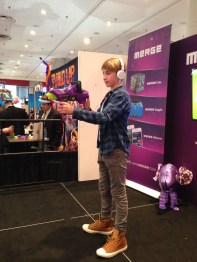
Thank you Wikipedia for the formal definition: “Mixed reality (MR), sometimes referred to as hybrid reality, is the merging of real and virtual worlds to produce new environments and visualizations where physical and digital objects co-exist and interact in real time.” Move in a real space and you move similarly in the parallel universe of the imaginary space on the screen.
Variations On Classic Themes. Slime is back. A generational fad if ever there was one (comes back about every 17 years). When Cra-Z-Art saw sales of its glue soaring as children used it with other ingredients to make slime, the company licensed the Nickelodeon name and produced a now best-selling slime-making kit. Meanwhile, Keycraft Global’s variant comes in Goobands (remember SillyBandz?), and Steven Spangler has DIY slime science kits. That’s just three of many slimey products. . . .Twee (funny name for a company, but hey) offers gorgeous sidewalk chalk that comes in the shapes/images of sushi, glittery donuts, and more. . . .Bobble Head banks from Tin Box Company featuring DC, Star Wars and other licenses. . . .My Arcade’s miniature arcade replica games licensed from Bandai Namco and Data East.


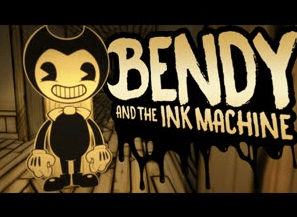
Hot Brands. Rick & Morty. Game of Thrones. Minecraft. I keep hearing that Paw Patrol is falling off, but it’s still omni-present. Ditto for Star Wars, but more on that in an upcoming post. Coming on strong: Bendy and the Ink Machine. I didn’t know, either, folks; year-old horror videogame from TheMeatly Games. Runs on multiple platforms. Watch it (the brand), but don’t wait too long to sign on.
Off-the-Beaten Path Licensed Brands. Bachman Trains with Ringling Bros. Barnum & Bailey Circus (now certainly a nostalgia brand; how long can it be maintained? Will Feld revive the brand in a new context?) and Norman Rockwell. . . .American Chess picking up Bobby Fischer. . . .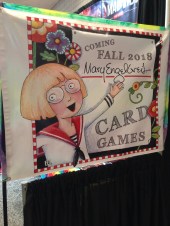 Kitchen/home graphic designer and children’s book illustrator Mary Engelbreit will have her own Looney Labs card games later this year.
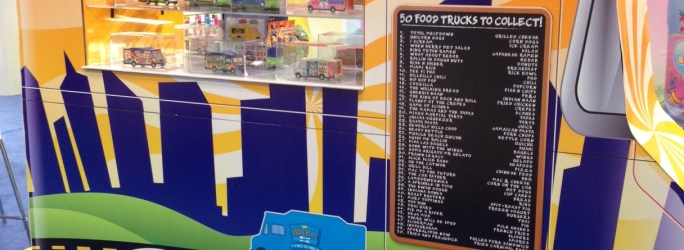
Collectables. Imperial Toys’ collectable food trucks, coming out fall. Imperial is known for bubbles — and they have a new variant on the flavored bubbles they first introduced a year ago, to be known as Lick-A-Bubble going forward (1.6 million views of the ad on Youtube since mid-January). But food trucks are definitely trending, and for a company as non-trend-rooted as Imperial to come up with nice designs, with side hoods that go up to reveal the kitchens plus movable roofs, this is a nice surprise. The preliminary packaging says 5+ but I see this as a 20-something office fad. Toys aren’t just for kids, you know.


On that note: There has long been a market for upscale collectables for adults, but credit Funko for expanding the category and giving it legs.
New, Neat & With Licensing Potential. Stroller Costumes to entice kids to get in. “Inspired by my son, who refused to get in the stroller. I designed one that looked like a truck. Problem solved,” says inventor/dad-preneur Moses Atkins. Definite potential for licensing. He found interest among licensors, retailers, and manufacturers.
Sago’s Pillow Playsets, which are beautifully detailed with sewn pockets, curtains, and other features. Retailing at $49.95, for upscale toy/gift boutiques and, again, potential for licensed versions. Toronto-based Sago, by the way, launched five years ago offering wordless apps for kids that have now been downloaded 27 million times and subsequently became an activity toy company.
Roooz Planet is a book with an exceptional array of characters its author/illustrator Rooz Mousaur sees delivering environmental messages.
Glove-A-Bubbles makes an oversized glove that has a pouch for bubble mix and different size holes above the fingers. Empty the bubbles into a dish, dip the upper part of the glove in, and wave your hand to generate multiple sized bubbles. The original art isn’t that interesting, but the concept could definitely work for licensed characters.


Other Views. Writer/consultant/photographer Karen Raugust kicks off her Toy Fair coverage with a look at the role social media influencers such as toy testers, mommy bloggers, comedians, singers and pranksters are playing in the toy industry. LIMA’s Inside Licensing goes behind the press releases, including commentary on poop toys and games, and collectables. The Wall Street Journal explores the toy industry’s efforts to match fast fashion’s speed to market.
Looking for an independent analysis of your existing or potential licensing program? Contact me at ira@iramayer.com.
Inadvertent Case Study: Jimmy Buffett’s Margaritaville Lifestyle Brand
BROOKLYN, NY; February 11, 2018—One of the best inadvertent case studies of a licensing program I can recall ostensibly centers on the imminent Broadway opening of Jimmy Buffett’s musical “Escape to Margaritaville.” But the guts of the piece are about “the Margaritaville® Mesquite BBQ Rub:” how Buffett the millionaire maintains the “authenticity” of his heavily licensed laid back lifestyle brand.
“This is America, and poor-quality licensed products are our birthright,” writes Taffy Brodesser-Akner in the Sunday New York Times.
“But Mr. Buffett won’t give you that. . . . He protects your experience of the lifestyle he sells in a way that someone living that lifestyle should be incapable of. . . .This is no longer a business. This is a cause.”
When did that metamorphosis occur for the ’70s singer/songwriter/leader of the Parrotheads? “Probably it was around the first time he put the Margaritaville name on a salt shaker-shaped pool raft labeled ‘Lost Shaker of Salt.’ Or went all-in on a brand partnership to sell a $499.99 Tahiti™ Frozen Concoction Maker®. Or when he signed off on the emblazonment of ‘I’m the Woman to Blame’ across a Tervis tumbler.”
There’s much more, from why he took over his own licensing (“because he could do it better than the people who were ripping him off with concert T-shirts that spelled his name as Buffet.”), and myriad ways “he could make sure that even when he left town [after a concert his fans] could still have the island getaway they so longed for.”
A must read.
Attending Toy Fair? Karen Raugust and I will be addressing the question, “Are You Ready For Licensing?” Sunday February 18, 3:30-4:30 p.m. as part of the Toy Association’s Licensing Content Connection seminars (free to registrants). Hope to see you there, or contact me at ira@iramayer.com to meet at another time.
 Mayer On Marketing, Licensing, and Merchandising