Awesomeness Seeks to Bridge ‘Connectivity and Commerce’ For YouTube Stars
“They call themselves ‘creators,’ we call them ‘influencers,’” says Dreamworks/AwesomenessTV’s Jim Fielding. Dreamworks owns Awesomeness, which is a marketing engine for young (often very young) makers of YouTube videos. There is also an Awesomeness social media community for the tweens and teens that marketing engine targets.
Fielding, who spent more than a decade with Disney Stores, including four years as President, and then served as CEO of Claire’s, knows his audience — and old media types like me are decidedly not in his sights. Fielding’s mission: “Connectivity and commerce,” he says — to help those “creators” establish strong direct relationships with consumers as well as a strong retail presence.
From a viewer perspective, Awesomeness is an umbrella for YouTube channels that cater to these demographic groups. The nomenclature is awkward, though: Awesomeness refers to its social media offering as a network while it prompts those coming to its website to “Watch our channel.” But the “channel” is an aggregation of 91,000+ existing YouTube channels as well as those generated specifically by Awesomeness. And again, admittedly, I’m not the target, but I find the AwesomenessTV interface confusing for trying to find a specific creator’s work unless they happen to be featured. (Much easier to get there directly through YouTube.)
Semantics and my own navigation challenges aside, the channel signs creators with existing YouTube followings and uses its marketing expertise to propel them to higher levels of viewership. Licensing can become part of the package — that’s part of where Fielding figures in — though as in other entertainment realms, the creators often retain those rights for themselves, or their managers/agents/parents/lawyers or other handlers.
Still, the power of that umbrella is considerable. “Discovery might have 300,000 viewers for a very successful video,” Fielding told me at Licensing Expo in Las Vegas last month. “We put a video up yesterday that had 1.5 million views in three hours.” Awesomeness adds 24-32 “pieces of content per week, plus longform” videos. Awesomeness also creates videos for brands looking to engage its audience of tweens and teens.
While many see the shelf-life of these videos as extremely limited, Fielding points out that search can bring viewers back to old episodes. He cites as an example “Life So Rad,” a series created for retailer Kohl’s. When the third season went up, viewers sought out the first two seasons, which they found even though those older shows were no longer highlighted on the site.
That can be a blessing and a curse, since the fashions a Kohl’s might be featuring in a season one episode probably don’t exist by season two, let alone season three. Still, it signals that much sought after level of engagement.
Among the more successful of Awesomeness’s stars are:
- Amanda Steele, who started posting YouTube videos when she was 10 and is now 16. Her subjects: beauty and fashion.
- Ingrid Nilson, who has been making videos for seven years, was a judge on Project Runway, and has three million YouTube subscribers and at 26 is earning 6-7-figure endorsement and other marketing fees.
- Tyler Oakley, a humorist, author, and gay rights advocate who used his social media celebrity to raise $1 million on his birthday for The Trevor Project, an L.A. non-profit that provides a safe haven for LGBT and questioning youth in times of crisis. On the more “commercial” side, he stages pajama parties on college campuses, where $250 VIP tickets include meet ups.
The company will support a new “creator” by backing production of 6-12 episodes. “If there’s the right engagement we’ll do more,” Fielding said.
Fielding sees the biggest threat to these celebrities’ longevity in how long they will be willing to produce two to three videos a week. “Most of them started by making selfies,” he notes. The more visibility they get, he adds, the more sophisticated the production values get and the more time it takes to produce even 2-3 minute clips.
The bottom line, says Fielding: “The fans will tell us when [the Awesomeness creators/influencers] aren’t relevant.”
Contact: Jim Fielding, jim.fielding@dreamworks.com.
What I Learned At Licensing Expo 2015, Part II: Beyond ‘Device-Agnostic’
The younger the consumer the less he or she cares which device they watch or listen to. It’s been apparent for several years now that they don’t think in terms of computer, stereo, smartphone, TV, radio, etc. They want their content on whatever device is convenient at the moment.
But they also don’t think in terms of film or a game or a traditional TV show or a Netflix or YouTube or other video. It’s all entertainment to them, a fact that is underscored by the way PBS Kids emphasizes digital games for its preschool shows; movies deliver trailers a year out and prolong the life of a release through, again, games and other online extensions; or TV shows extend their season with mini-episodes online.
All of this is cause for a wholesale re-thinking of how all forms of entertainment are marketed — let alone how entertainment consumption is measured.
A complaint that came up repeatedly at Licensing Expo this year from toy companies, movie studios, TV and video networks, and other IP owners, and which I’ve heard from people in music and other entertainment sectors as well, is how difficult it is to measure the popularity of a given movie, TV show, music recording, game or other piece of “content” across even the major platforms.
Whether YouTube or Netflix or Amazon or Facebook or Twitter or Spotify or… the owner of a piece of intellectual property has to go into each platform’s analytics independently, with no shared interface to simplify the process.
For marketers that means learning a host of analytics systems when all they really want is “the numbers” and probably aren’t statisticians. For large companies with dedicated departments that’s not a big issue. For anyone else (and that includes most companies), it is a very big issue indeed.
Is there anything out there that aggregates this wide range of user data across platforms?
Advertising That Thinks Differently
Jonathan Capehart of the Washington Post captures the significance of a powerful Starbucks ad honoring Dr. Martin Luther King, Jr. in an op-ed piece today.
Advertising By Invitation
Two emails from Land’s End this morning. One to the email address I’d been using for 20 years; the other to the new one I attempted to switch my account to.
Subject line for the message that went to the old address: “Ends today: 25% off your order, for best customers only”
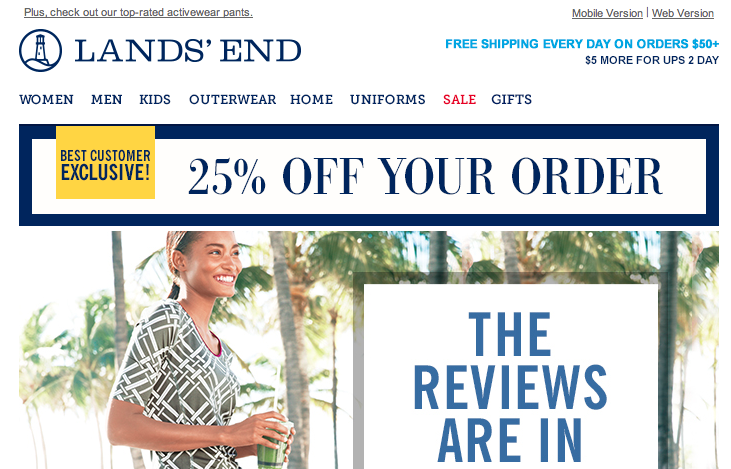
Subject line to the new address: “Ends today: 20% off your order”

The content of the body of the emails is identical, except for the amount of the discount.
We invite companies to advertise to us when we sign up for alerts on their websites, or make purchases and don’t opt out of promotional messages. What an incredible opportunity we give those advertisers.
Just don’t try to change your email address or you’ll mess them up.
 Mayer On Marketing, Licensing, and Merchandising